

Die Saw / Wafer Dicing Carrier and Fixture FAQs
Wafer Dicing is a critical semiconductor manufacturing process used to separate individual dies from a processed wafer. Common challenges in wafer dicing generally fall into three major categories: quality defects, improper process parameters, and equipment-related issues.
Why Are Post-Dicing Wafer Carriers Held to Higher Standards Than Shipping Boxes?
The primary purpose of a wafer shipping box is to protect wafers during transportation. In contrast, wafer carriers used after dicing must interface with automated handling systems, vision sensors, and robotic pick-and-place equipment. Even minor dimensional deviations can lead to wafer damage, misalignment, equipment errors, or reduced production yield.
How Should Slot Quantity of the Wafer Frame Cassette Be Selected?
The standard configuration of the Wafer Frame Cassette is typically 25 slots; however, customized slot quantities can be designed based on specific production requirements. For example, 12-inch (300 mm) wafer manufacturing systems commonly utilize FOUPs (Front Opening Unified Pods) that comply with the SEMI E47 standard.
What Problems Can Result from Insufficient Precision of the Wafer Frame Cassette?
If slot pitch of the Wafer Frame Cassette is inconsistent or carrier surfaces are not sufficiently flat, issues such as wafer edge chipping and dicing line deviation may occur. These defects can significantly reduce yield, particularly in advanced semiconductor processes that require extremely narrow scribe streets and high cutting accuracy.
Why Is Wafer Frame/Metal Dicing Ring Rigidity as Important as Dimensional Accuracy?
If a wafer frame/dicing ring lacks sufficient rigidity, slight deformation may occur during tape expansion or transportation, leading to:
● Uneven stress distribution across the wafer, resulting in backside chipping.
● Alignment failure, where automated CCD vision systems cannot accurately locate the center of the scribe line due to frame distortion.
For this reason, SUS 420J2 and other 420-series stainless steels are widely used in the industry because of their excellent hardness after heat treatment and superior dimensional stability.
Do Different Wafer Frame/Dicing Ring Sizes Have Different Precision Requirements?
Yes. As wafer diameter increases, maintaining flatness becomes increasingly challenging. Larger wafer frames/dicing rings typically require tighter control of flatness, rigidity, and dimensional stability to ensure reliable automated handling and dicing performance.
How Can Wafer Frame/Dicing Ring Precision Be Verified?
● Automated Measurement: Non-contact scanning systems are used to measure flatness, thickness variation, and dimensional accuracy.
● Visual Inspection: Frame edges are inspected for laser-cutting burrs. Burr height is typically required to be less than 0.05 mm to prevent damage to dicing tape and ensure stable wafer processing.
What Information Should Be Provided When Requesting a Quote for Wafer Dicing Carriers?
To provide an accurate evaluation and quotation for wafer dicing carriers, customers are encouraged to provide wafer size (6-inch, 8-inch, or 12-inch), equipment brand and model, carrier type (Wafer Frame, Dicing Ring, Wafer Cassette, Frame Cassette, Shipping Box, etc.), material requirements, dimensional specifications, SEMI standard requirements, operating environment, and estimated quantities.
For customized products, customers may also provide 2D/3D drawings, samples, or special process requirements to help Zhanyang quickly evaluate the design, confirm specifications, and estimate lead times.
How Does Zhanyang Support Customers with Die Saw & Wafer Dicing Carriers, Wafer Frames/Dicing Rings, and Cassettes?
Zhanyang has extensive experience in developing process carriers for semiconductor Die Saw and Wafer Dicing applications. Based on customer equipment specifications and automation requirements, we provide customized solutions including Wafer Frames, Metal Frames, Dicing Rings, Wafer Cassettes, Frame Cassettes, Shipping Boxes, and Process Carriers.
Leveraging high-precision CNC machining, advanced metrology capabilities, and SEMI-compliant design expertise, we effectively control frame flatness, slot pitch accuracy, and structural rigidity to minimize deformation and wafer damage during transportation, dicing, and tape expansion processes.
We also offer specialized designs with ESD protection, chemical resistance, and high-cleanliness features to enhance equipment compatibility, process stability, and production yield. Our solutions are widely used in advanced packaging, power semiconductor applications (SiC/GaN), MEMS devices, and high-end wafer manufacturing processes.
- 關聯產品
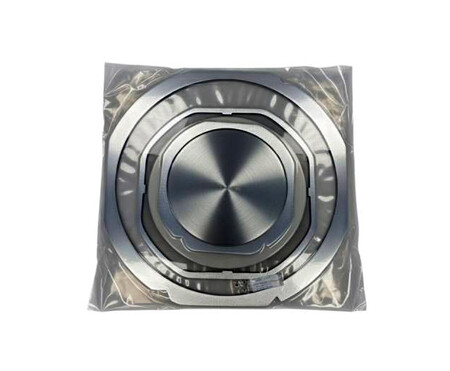
Wafer Frame/ DISCO Wafer Ring
A Wafer Frame, also known as a Wafer Ring or Dicing Ring or DISCO Wafer Ring, is an essential...
Details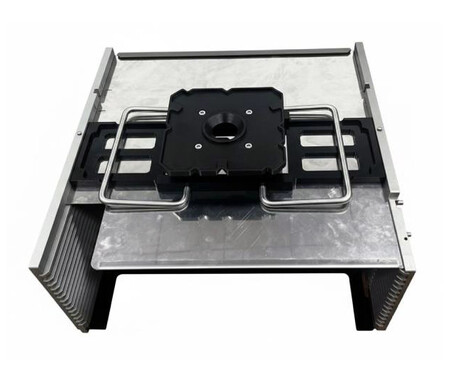
Aluminum Wafer Cassette
Aluminum Wafer Cassette (also known as a Wafer Carrier, Wafer Boat, or Wafer Storage Cassette)...
Details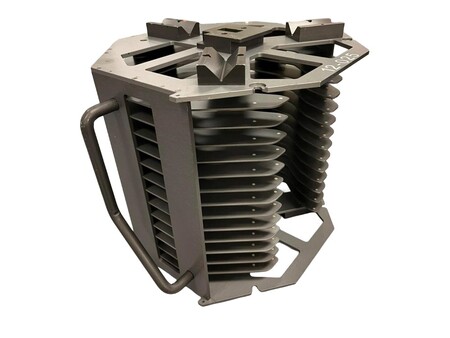
Wafer Basket
Wafer Baskets are indispensable carriers in semiconductor and optoelectronic manufacturing...
Details


